

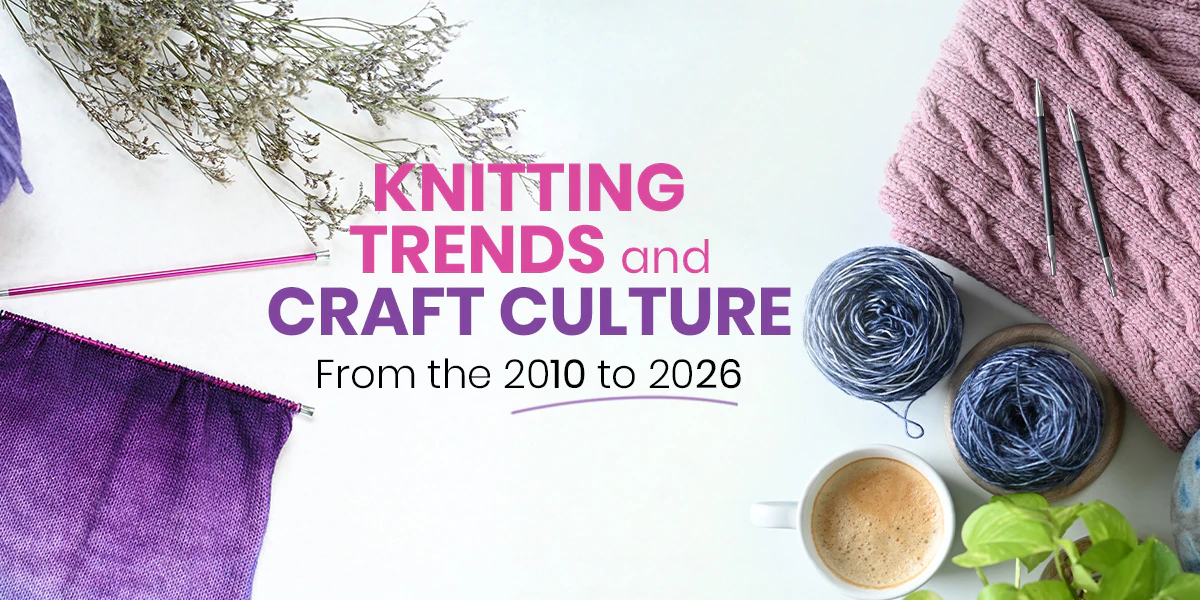
If you picked up your first pair of knitting needles somewhere between 2010 and 2015, you might barely recognise the knitting world of 2026. The craft is still the same: two knitting needles (types & sizes according to the project), a length of yarn, a repeated stitch, but almost everything around it has shifted. The crafter community has all ages (as young as 10 to as experienced as 100), the patterns are bolder, the tools are better engineered, and the reasons people knit have become a whole conversation in themselves.
KnitPro also began its journey in the 2010s and has now become a worldwide name serving the global crafting community with innovative tools, hand-dyed yarns and creativity.
Here is a proper look at how knitting has changed and why it matters.
What Was the Knitting Community Like in the 2010s?
The defining platform of the 2010s knitting world was Ravelry, launched in beta in 2007 and fully mainstream by the time the new decade began.
By 2019, around 82,335 patterns had been published on the site in that year alone, compared to 51,363 in 2010; a 60% increase across the decade.
For a large portion of the decade, knitting lived in a relatively quiet digital space. Knitters shared work on personal blogs, browsed Ravelry for patterns, and discovered hand-dyed yarns and indie dyers through word of mouth on forums and Etsy. The community was passionate, but it required effort to find. You had to look for it.
The yarn market was evolving, too. Independent hand-dyers were gaining visibility, and the appetite for premium natural fiber yarn, such as merino wool, alpaca, and silk blends was growing steadily. But the market was still discovering itself.
In 2026, it’s the world of a global community of makers, hand-dyed yarn artisans.
How Did the Pandemic Change Knitting Culture?
It would be impossible to write about the shift in knitting culture without acknowledging 2020. The pandemic pushed people indoors and toward their hands. Ravelry recorded 89,250 knitting and crochet patterns published in 2020, its highest single-year total ever. Craft retailers reported spikes in yarn sales globally, and knitting moved from a quiet niche into mainstream lifestyle content.
But the pandemic did not just bring knitters back. It brought an entirely new demographic to the craft: younger, more diverse, more experimental, and far more likely to document the process on social media. This was the moment knitting became genuinely cross-generational.
Also Read: The Gen Z Crafting Trend: Why Young Makers Are Falling in Love With Handmade
How Big Is the Knitting Market in 2026?
The numbers tell an interesting story. The global knitting and crochet market was estimated at USD 10.1 billion in 2025 and is projected to reach USD 17.9 billion by 2034, growing at a CAGR of 6.53%.
That growth is not coming from the demographic that drove the 2010s. Beginner crafters rose 34% and intermediate users increased 27% between 2021 and 2025. With crafters, KnitPro grew its wide range of knitting needles, exploring new knitting needle sets, ergonomic cubic knitting needles, innovative carbon fiber needles, while keeping beginner-friendly materials such as bamboo and engineered wood.
Where Do Knitters Spend Time Online in 2026?
In the 2010s, the knitting community lived on Ravelry, personal blogs, and Instagram. In 2026, TikTok and YouTube Shorts have become the primary discovery platforms for new knitters. A knitting tutorial that would have taken months to spread through blog networks in 2013 can reach hundreds of thousands of people in 48 hours today.
Short-form video has given knitting a visual language that speaks directly to people who have never held a knitting needle before. This has had real consequences for how trends move. In the 2010s, a stitch technique or pattern style could take a full season to build momentum. In 2026, the right video can take a technique from niche to mainstream in a matter of weeks.
Digital pattern downloads surged 56% between 2021 and 2025
What Are Knitters Making in 2026?
The 2010s were defined by the yoke sweater and the shawl. While both are still popular, the 2026 project palette is noticeably broader and more playful.
Colorwork knitting has moved beyond Scandinavian motifs into bold, graphic, sometimes irreverent territory. Wearable accessories, statement garments, and projects built around a specific yarn's color story are all dominant trends right now.
Also Read: Knitwear and Crochet Trends for 2026
Is Knitting Good for Mental Health?
This is one of the most-searched questions about knitting in 2026, and the research gives a clear answer. A study published in The British Journal of Occupational Therapy found that 81% of respondents with depression reported feeling happy after knitting, with more than half reporting feeling very happy. The repetitive, rhythmic nature of the craft produces measurable reductions in anxiety and cortisol levels, a fact increasingly referenced by wellness researchers and occupational therapists.
In 2026, the mental health benefits of knitting are part of why people tell others they knit. Not just "it gives me something to do with my hands," but "it genuinely helps me." The wellness conversation around craft has moved from anecdote to evidence, and that shift matters for how the whole craft is perceived.
Also Read: Mindful Making: The New Era of Knitting and Crochet
How Have Knitting Needles and Tools Improved?
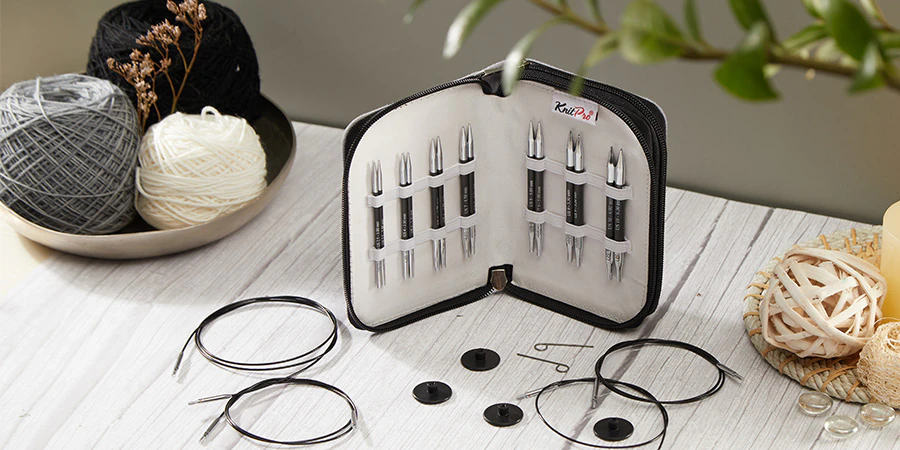
Knitting tools have moved on considerably since the early 2010s. Ergonomic knitting needle design, precision engineering, and the rise of interchangeable circular needle systems have changed how makers build their toolkit.
Where a 2010s knitter might have owned a basic set of straight needles and a handful of circulars, knitters in 2026 are building complete interchangeable circular knitting needles that serve multiple projects at multiple sizes.
Materials matter more than ever, too. Warm laminated birchwood offers natural glide and comfort during long sessions. Anodised aluminium delivers smooth, lightweight performance. Carbon fiber needles bring revolutionary strength and flexibility. The knitting needle you choose for a project is now a considered decision, not an afterthought.
Also Read: Does the Knitting Needle Material Affect Your Crafting?
What Has Stayed the Same?
For all the shifts in platform, demographic, sustainability values, and cultural conversation, the thing that draws people to knitting remains exactly what it always was. You make something with your hands and build skills, a sustainable future and a slow crafting movement.


