

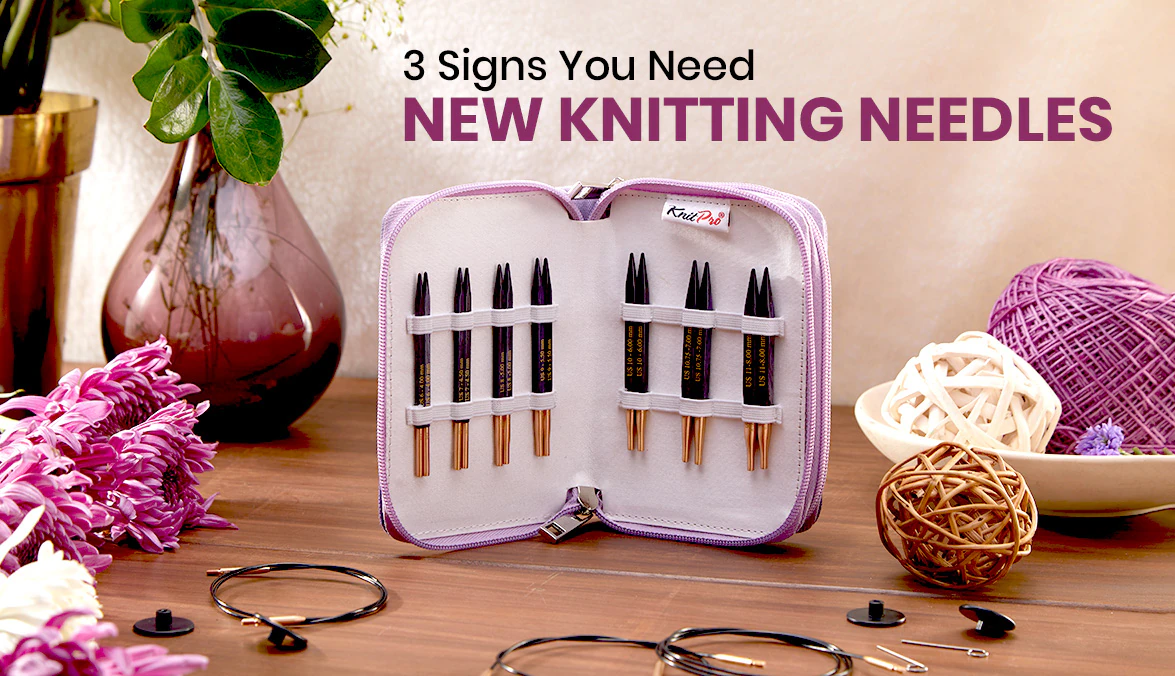
Many knitters begin with a pair of bamboo knitting needles, borrowed from a friend or picked up cheaply at a craft store. Over time, the collection grows: smooth wood, stainless steel, acrylic, carbon fiber and more. From single pointed needles to interchangeable tips, fixed circulars in every length and cubics & more, the collection is ever expanding. There's nothing shameful about this. New knitting needles are always a legitimate source of joy, but can be genuinely useful in some situations.
But some upgrades disappoint. A new set of knitting needles purchased in the hope of fixing uneven tension sits beautifully in its case, while the real problem is yarn-wrapping technique carries on unchanged. No tool was ever going to fix that.
So before reaching for your wallet, ask one question: Is this a tool problem or a technique problem?
Here are situations when upgrading your knitting needles is actually worth it.
1. Your Hands Hurt After Knitting
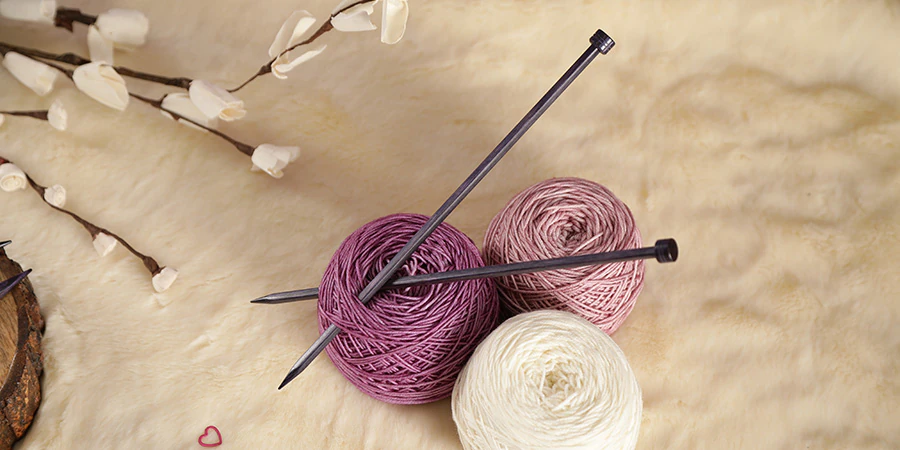
Physical discomfort is the clearest, most legitimate reason to invest in different needles. Metal needles are heavier than wood or carbon fibre, and if you're already prone to wrist strain, that weight accumulates over a long session. Switching to a lighter material can make a real, measurable difference. Ergonomic knitting needles are also a convenient solution. Cuboid-shaped knitting needles, also known as cubics, have a surface that is much easier to hold. Statistics has proven that cubic knitting needles are perfect for knitters suffering from arthritis, carpal tunnel syndrome and other ailments in hands.
The same logic applies to slippery yarns like silk or bamboo: if stitches keep sliding off metal tips, needles with more surface grip, wood or bamboo aren't a luxury. They're the practical fix for a genuine problem.
2. You're Using the Wrong Knitting Needle Type for Your Project
Some upgrades aren't about quality at all, they're about having the right knitting needle types for different projects. Attempting your first sweater in the round on double pointed needles isn't a tension problem or a technique problem; it's a geometry problem. You simply need circular needles.
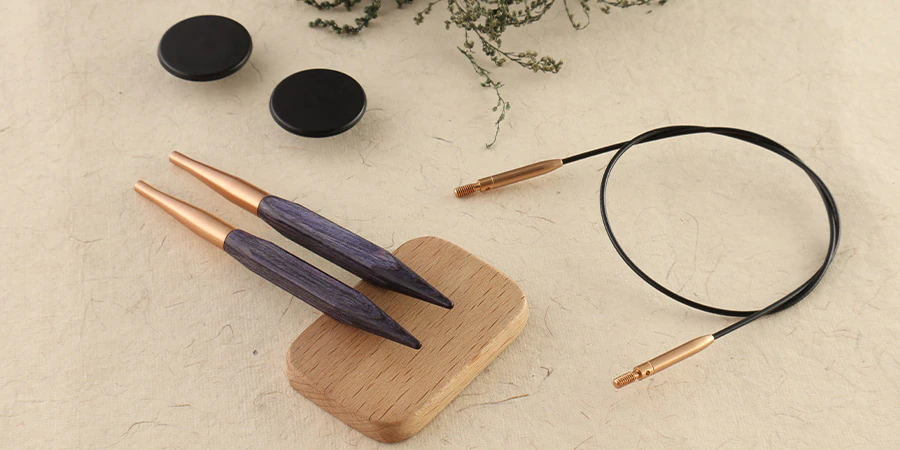
The same applies to double-pointed needles for small circumferences like socks, or a cable needle for complex Aran work. If you can name the exact technical problem a new needle solves, it's almost certainly a worthwhile purchase.
Also Read:Does the Knitting Needle Material Affect Your Crafting?
3. Your Tools are Physically Fighting You
Quality matters when a cheap tool is actively creating problems. Rough joins that snag yarn, fixed circular cables that kink and won't lie flat — these slow you down and can damage your yarn. If your tools are working against you, replacing them is fair and sensible.
When no Knitting Needle Upgrade Will Help You (Yet)
1. Uneven Tension
This is the big one. Many knitters spend months, sometimes years, convinced that the right needle material will smooth out their stitches. It won't. Tension is almost entirely a skill issue: it lives in your hands, your yarn-tensioning method, and the muscle memory you've built up through repetition. Metal needles will not force more consistent tension. Bamboo will not let you "feel" the yarn better in any way that compensates for technique. The only fix for uneven tension is time and practice.
2. Slow Knitting Speed
New knitters often believe that sleeker, more expensive needles will help them knit faster. Marginally, once the technique is already solid, they might. But if you're still building muscle memory, no needle is going to meaningfully speed you up. The movements come first; the tools can be refined later.
3. A Difficult Pattern
Struggling with a complex lacework shawl? That's not a needle problem. It calls for better stitch-marker habits, more careful counting, and possibly a simpler project to build confidence on first. A new set of interchangeable tips won't change any of that.
A useful test: if you borrowed the most basic metal needles available and cast on your project, would the core problem disappear? If the answer is no, no purchase will fix it.
A Simple Framework: Enablers vs. Enhancers
The most practical way to evaluate any knitting tool purchase is to sort it into one of two categories.
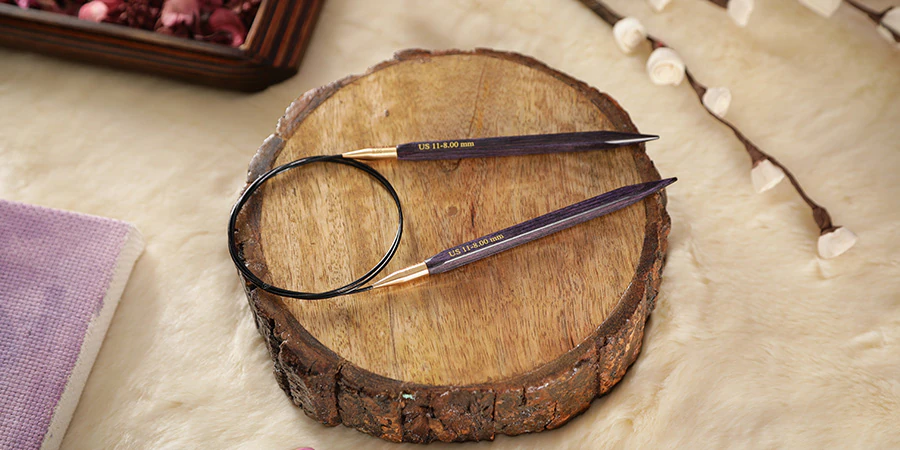
Enablers are things you genuinely cannot do the project without: the right needle length, a cable needle, a stitch holder. These purchases are non-negotiable if the project requires them.
Enhancers are things that make the experience more pleasant without changing the outcome: nicer materials, prettier colours, ergonomic grips, fancier storage cases. Enhancers aren't bad — knitting is a hobby, and enjoying your tools has real value. But go in with clear eyes: you're buying pleasure, not performance.
The most experienced knitters tend to have small, very specific tool kits built up over years of paying attention to exactly what slows them down or causes discomfort. That specificity is the goal. Start there.
Knit more. Notice what actually creates friction. Then buy the one thing that solves that specific problem.
Your tension will still belong to your hands. But your hands will thank you for making the journey comfortable.


