

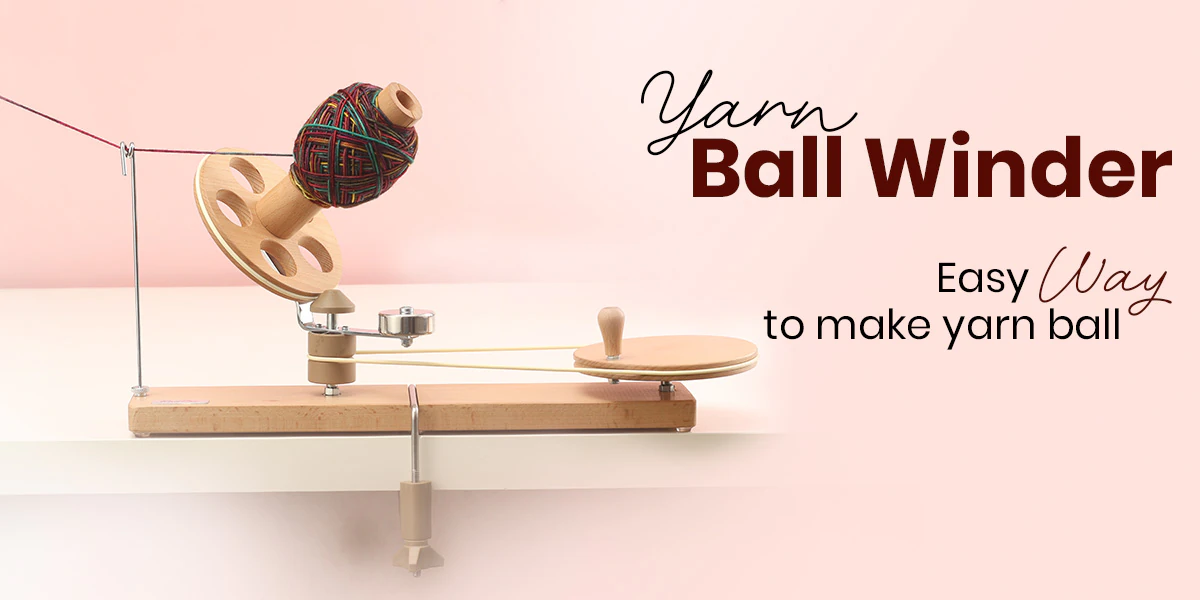
If you've ever spent treasured time untangling a yarn knot instead of actually knitting or crocheting, you already know why a good yarn ball winder earns its spot on every crafter's shelf. You can solve at least one frustrating crafting snag. The KnitPro yarn ball winder solves that problem properly, turning skeins and hanks into smooth, center-pull yarn cakes that feed effortlessly while you work.
Whether you're a longtime knitter with a growing yarn stash or someone just starting out and wondering what tools actually make a difference, this is one of those small purchases that changes how much you enjoy your craft time.
Why Every Yarn Lover Needs a Ball Winder
Store-bought yarn doesn't always arrive ready to use. Skeins and hanks are wound for storage and display, not for smooth crafting, and pulling yarn straight from one usually ends in tangles halfway through your project. A dedicated yarn winder for knitters (and crocheters) solves this before you even pick up your knitting needles or crochet hook.
The KnitPro yarn ball winder is handcrafted from durable, laminated beech wood and built to wind up to 450 grams (about 15 ounces) of fingering weight yarn into a single, even cake. It's available in two beautiful wood finishes, so it looks just as good sitting on your crafting table as it performs.
The KnitPro Swift/Skein Winder offers a super-smooth finish for quick and snag-free rotation, to wind a skein (or unwind) it into a yarn cake in no time. The natural and coloured beech wood has an attractive look and a useful purpose for all craft lovers.
What really sets this KnitPro swift and wool ball winder apart is the built-in anti-friction mechanism. It keeps the winding motion smooth and consistently tensioned, so your finished yarn cake doesn't come out lopsided or overly tight. Anti-skid rubber pads keep the whole unit stable while you crank, so it won't slide around or scratch your table. And because it's designed with longevity in mind, replacement bands are available separately, so this is a tool that's built to last through years of projects. A wooden yarn dispenser keeps the wound yarn balls safe and neat.
If you're searching for the best yarn ball winder that balances craftsmanship with everyday practicality, this is exactly the kind of tool worth adding to your setup.
Also Read: Winding your Yarn the Right Way
How to Wind Yarn into a Ball: Step by Step
Wondering how to wind yarn into a ball without ending up in a mess? Here's the process, broken down simply.
Step 1: Clamp it to your table. Attach the winder to the edge of a sturdy counter or table using the built-in clamp, leaving enough room for the yarn to feed freely around the metal guide arm. If you're using a swift alongside it, set that up right next to the winder too.
Step 2: Find the end of your yarn. This step takes a little patience, especially with skeins or tight hanks. A swift winder makes this much easier. It opens up like an umbrella and holds the skein steady, so you can spot the loose end and separate the strands without a fight.
Step 3: Attach the yarn to the metal feeder. Loop the end through the feeder and lock it in place so it doesn't slip loose as you start winding.
Step 4: Start slow. Your first few turns should be gentle, which lets the little yarn tail tuck neatly into the center of the cake. You'll be able to pull it out easily later.
Step 5: Keep winding steadily in one direction. Once you've got a few rounds down, you can pick up the pace. Stick to the same direction throughout, and within a few minutes you'll have a perfectly wound yarn cake ready to use.
This is honestly the fastest way to wind yarn skeins into something you'll actually enjoy working with, and once you've done it a couple of times, the whole process takes just minutes.

The Yarn Swift and Ball Winder Combination
If you wind yarn often, pairing your winder with a swift changes everything. A yarn swift winder and ball winder set lets the yarn skein unwind freely while the winder pulls yarn at a steady, even pace, which means fewer tangles, less stopping and starting, and a much smoother experience overall.
This combination is especially useful if you work with hand-dyed yarn. A dedicated yarn winder takes the guesswork out of prepping those special, often more delicate hand-dyed yarn skeins for your project.
Why This Belongs on Your List of Best Tools for Knitting and Crochet
A center-pull yarn ball isn't just neater to look at. It feeds from the middle instead of rolling around your workspace, which means less chasing your yarn across the floor and fewer accidental tangles while you knit or crochet. Paired with the KnitPro range of knitting accessories, a good yarn winder for skeins to balls rounds out a setup that makes every project just a little easier to enjoy.
This is also genuinely one of the easiest yarn winding tools for beginners. The hand-crank design is simple to understand, the instructions included in the box walk you through setup, and there's a helpful video guide if you'd rather watch the process in action. If you're after the best yarn winder for beginners, the learning curve here is about as gentle as it gets.
Watch More: Winding Tools VO | Swift & Ball Winder | KnitPro
How to Avoid Tangled Yarn for Good
Winding your yarn before you start a project is, hands down, the simplest way to avoid tangled yarn later. A neatly wound cake feeds smoothly, resists snagging, and lets you focus on your stitches instead of your yarn. Once you store your wound cakes in a yarn box or dispenser, you'll wonder how you ever managed without one.
Ready to make yarn prep the easiest part of your next project? Explore the KnitPro ball winder and the full range of KnitPro knitting accessories to find the setup that fits your craft table.


