
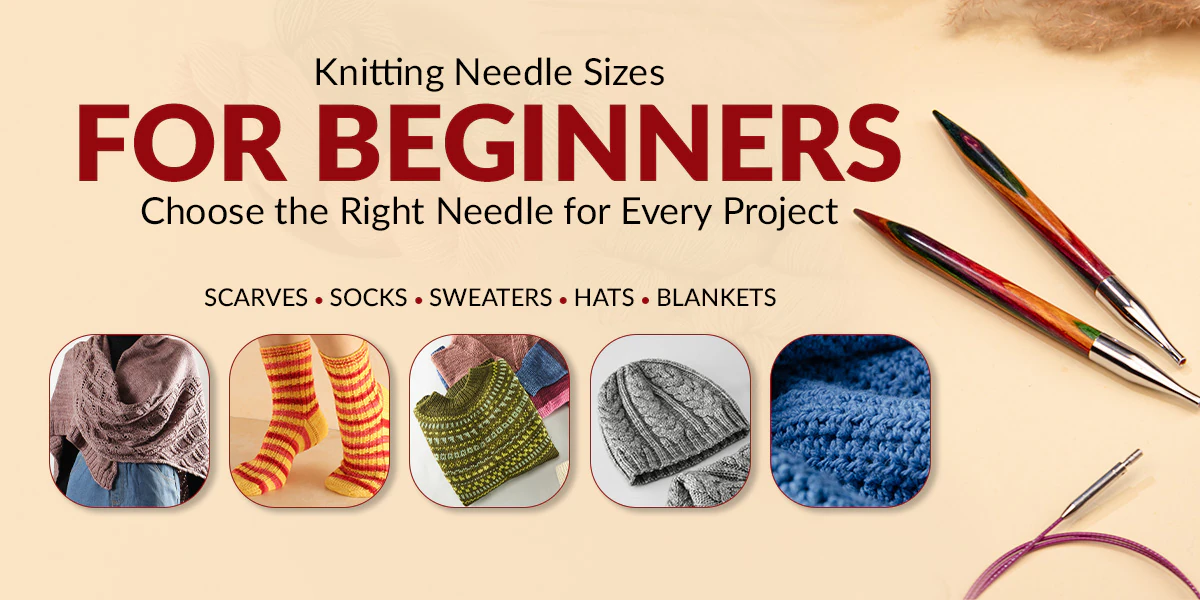
Choosing knitting needle sizes for beginners shouldn't feel like guesswork. What to choose for a winter scarf and what goes for a spring shawl and what to choose for socks or a sweater, needs a little footwork (before handiwork). If you've ever stood in a craft store staring at a wall of knitting needles labeled "US 7," "4.5mm," and "UK 7" wondering why none of those numbers match, you're not alone. Choosing the right knitting needles is one of the biggest hurdles new knitters face and honestly, it shouldn't be this confusing. This guide breaks down needle sizing in plain English, so you can pick up your yarn and start knitting instead of second-guessing your supply list.
Why Knitting Needle Sizes Feel So Confusing?
Knitting needles are sized using three different systems: US sizes, UK/Canadian sizes, and metric millimeters. A US size 8 needle, for example, is the same as a UK size 6 and measures 5mm in diameter. Patterns from different countries or eras often list only one system, which is why so many beginners ask: what size knitting needles should I use for beginners?
The answer: start with US 7–9 (4.5mm–5.5mm) needles. This mid-range size works with worsted weight yarn, the most common and forgiving yarn for new knitters and produces stitches that are easy to see, count, and correct.
These numbers add up with DK (double-knitting) weight yarn, a very common yarn weight that also tops among the yarn stash for most ardent knitters, crocheters and fiber artists. So, while learning strings of the craft, you can borrow the yarn for knitting practice.
Also Read: Knitting Needle Sizes: The Global Conversion Guide
How Needle Size Affects Your Knitting
The knitting needle size you choose determines two things: how tight or loose your stitches are, and how your project drapes. Smaller needles create tighter, denser fabric, ideal for socks, mittens, or anything that needs structure. Larger needles create looser, airier fabric great for scarves, blankets, and cozy sweaters.
This is exactly why knitting needles for socks are usually much smaller than needles used for blankets. Sock knitting typically calls for US 0–3 (2mm–3.25mm) knitting needles paired with fingering or sock-weight yarn, since a tightly knit fabric holds its shape, resists holes, and wears better over time.
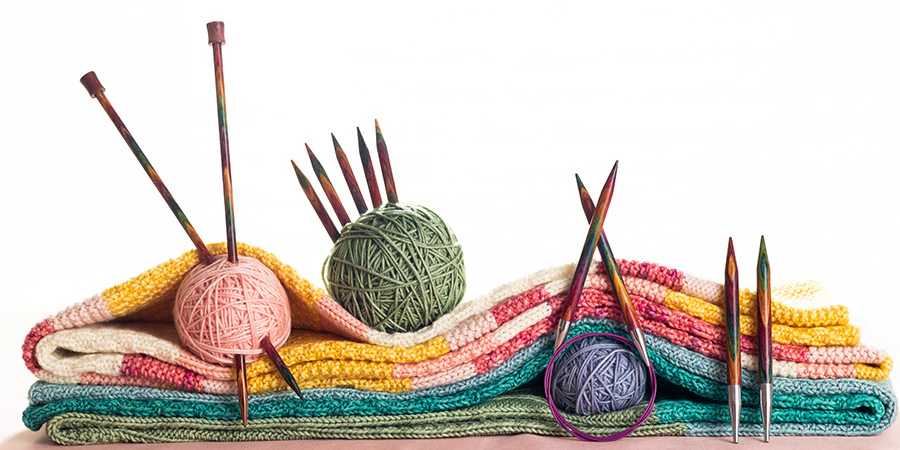
If you're a beginner eager to knit your first pair of socks, expect a learning curve; small knitting needles and thin yarn require more patience than a chunky scarf, but they're incredibly rewarding once you get the hang of it.
Also Read: Knitting Needle Sizes – All You Need To Know
A Simple Knitting Needle Size Chart for Beginners
|
US Size |
Metric (mm) |
Yarn Weight |
Best For |
|
0–3 |
2–3.25mm |
Fingering/Sock |
Socks, lace, baby items |
|
5–7 |
3.75–4.5mm |
DK/Light Worsted |
Light sweaters, shawls |
|
7–9 |
4.5–5.5mm |
Worsted |
Scarves, hats, beginner sweaters |
|
10–11 |
6–8mm |
Bulky |
Chunky blankets, quick projects |
Keep in mind, this chart is a starting point, not a strict rule. Every knitter's tension is different, which is why swatching (knitting a small test square) before starting a big project always pays off.
Do Knitting Needle Materials Matter Too?
Size isn't the only variable; the knitting needle material affects your knitting experience as well.
Bamboo and wooden needles are generally preferred. And, like those in the KnitPro Symfonie and Ginger ranges, offer natural grip and warmth in the hand, making them a favorite among beginners who find slippery stitches frustrating.
Metal needles, such as KnitPro Nova or Zing needles, are faster and smoother, ideal once you've built confidence and want speed.
Also Read: Does the Knitting Needle Material Affect Your Crafting?
What's the Best Knitting Needle Size to Start With?
If you only buy one set as a beginner, choose straight or circular needles in US 8 (5mm) with worsted weight yarn. It's the sweet spot: not so small that stitches are hard to see, not so large that fabric loses shape. Once you're comfortable with basic knit and purl stitches, branch out toward smaller sizes for socks or larger sizes for blankets.
Should Beginners Use Circular or Straight Needles?
Both work fine for learning the basics, but circular needles are increasingly popular even for flat projects because they distribute the weight of your work across a cable instead of two needle tips, reducing wrist strain. If you plan to eventually knit hats, sleeves, or socks in the round, starting with circulars means one less new skill to learn later.
Choosing the Right Knitting Needles for Your First Project
Knitting needle size doesn't have to be a mystery. Match your needle to your yarn weight, use the chart above as your anchor, and don't be afraid to swatch before committing to a project.
Whether you're picking up worsted-weight yarn for knitting needles for your first scarf or graduating to fine needles for your first pair of socks, a KnitPro knitting needle set makes the learning curve noticeably smoother. Many new knitters keep a small interchangeable set on hand so they can switch sizes and cable lengths for their projects while knitting back and forth or in-the-round. Happy knitting!


