

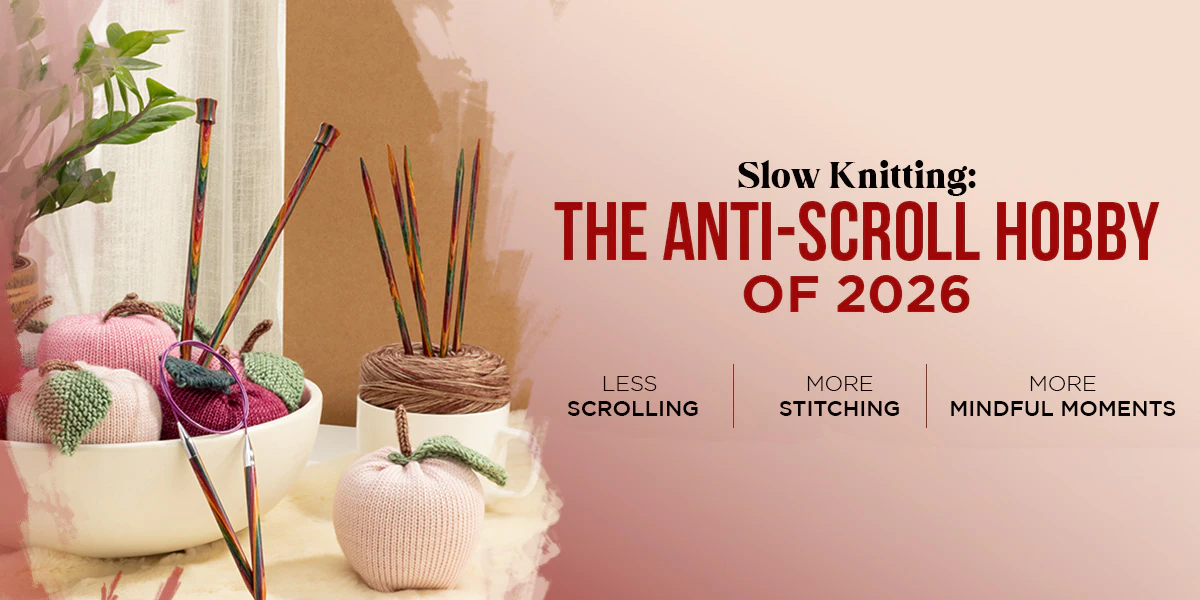
Slow knitting has become one of the defining wellness trends of 2026. Knitting is as old as the first human and yet very much changing lives to date. Somewhere between the fortieth notification and the third doom-scroll of the evening, a lot of us hit the same wall: we want our hands busy and our brains quiet, without a screen anywhere in sight. And slow knitting is the answer.
With KnitPro supporting makers and creativity, let’s walk you through the anti-scroll hobby. All you need is your favorite knitting needles, yarn and your creativity.
What is Slow Knitting?
Slow knitting is a mindful approach to crafting that prioritizes process over project. Instead of racing to finish a project or churning through pattern after pattern, knitters focus on the rhythm of each stitch, the feel of the yarn, and the quiet satisfaction of steady, unhurried progress. It's less about output and more about presence.
This isn't a new technique; it's the same knit and purl stitches knitters have used for centuries. What's changed is the intention behind it. In a culture built on constant stimulation, choosing a slow crafting hobby is enjoying handmade creativity.
Why Everyone's Knitting Again: The Slow Knitting Renaissance
If it feels like knitting is having a moment in 2026, that's because it is. GenZ is falling in love with handmade, exploring knitting and crochet. Search interest and social feeds alike are pointing to the same thing: knitting has become one of the hobbies taking over TikTok in 2026, but not in the fast, trend-chasing way most viral crafts do. Instead, the videos are slow, quiet, and almost meditative.
A few forces are converging to fuel the slow knitting movement right now:
- Screen fatigue is real. After years of increasing screen time, more people are actively searching for offline hobbies for stress relief that don't involve a device at all. Knitting fits perfectly.
- Mindful crafting is trending across generations. What used to be seen as a grandmother's pastime has been embraced by younger makers looking for a mindful hobby to replace scrolling. It's a big part of why Gen Z is picking up knitting in growing numbers, not as an ironic hobby, but as a genuine digital detox.
- Repetitive, tactile hobbies are proven to calm the nervous system. The rhythmic, repetitive motion of knitting has long been associated with knitting for anxiety relief and a meditative state similar to what's found in mindfulness practices. Occupying your hands with something simple and repetitive gives your mind permission to slow down, too. Knitting (or crochet) is proven to break bad habits.
Slow Knitting vs. Speed Knitting: What's the Difference?
Speed knitting is about output; finishing a sweater in a weekend, racing through a stash, optimizing every technique for efficiency. Slow knitting flips that priority entirely. It might mean:
- Choosing a project because the yarn feels good in your hands, not because it's fast to finish.
- Knitting a few rows a night instead of powering through a project in one sitting.
- Savoring a difficult stitch pattern instead of avoiding it for being "too slow".
- Treating the process itself, not just the finished object as the reward.
If you've ever wondered how to start slow knitting, the honest answer is: there's no wrong way in. Pick up knitting needles, choose yarn that feels good to touch, and let go of any deadline. That shift in mindset is really the whole practice.
Knitting Tools Worth Having on Hand
Part of what makes slow knitting so satisfying is the tactile experience itself, and the right tools make that easier to sink into. When people ask about the best needles for slow knitting, it’s what feels comfortable to you.
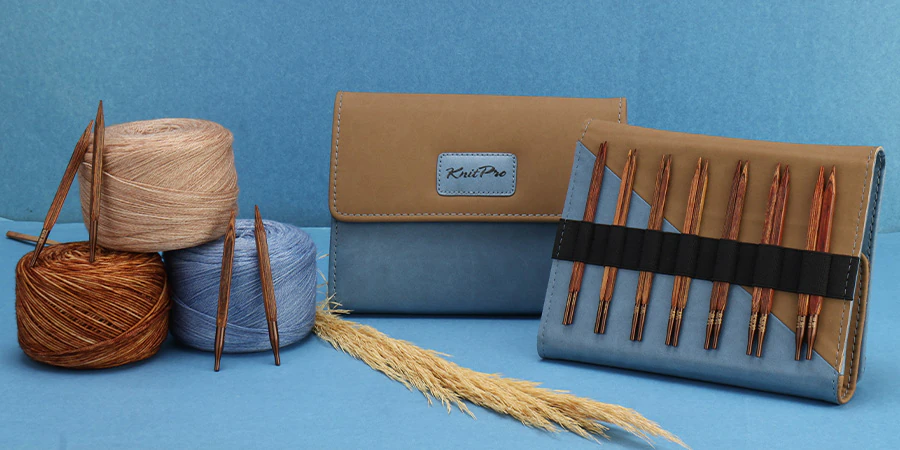
If you love warmth, wooden knitting needles are a good place. Symfonie 2 knitting needles come in seven vibrant colors & a signature chevron patterns, perfect for new to experienced makers. Dreamz and Ginger bring the warmth of birchwood. For ergonomic comfort, Ginger Cubics and J’adore are square knitting needles that help with a better grip.
Slick metal needles such as Mindful Collection, vibrant Zing are also playful tools that lets you enjoy the crafting.
Beyond needles, a few simple additions round out a mindful knitting toolkit: a project bag that keeps yarn tangle-free, stitch markers for patterns you're savoring rather than rushing through, and yarn in natural fibers that feel good against the hands. None of this needs to be elaborate, the goal is comfort and presence, not gear collecting.
Slow Knitting Project Ideas for Beginners
If you're new to the practice, the best entry point is a beginner slow knitting pattern with minimal shaping and a simple, repeatable stitch. A few reliable slow knitting project ideas:
- A garter stitch scarf in a chunky yarn — nothing to memorize, just steady rows.
- A simple textured dishcloth for short, low-pressure sessions.
- A basic beanie worked in the round, ideal for practicing rhythm.
- A chunky knit blanket square, one of the most popular chunky knit slow projects for building confidence without complex pattern-reading.
For knitters ready to go a step further, meditative knitting patterns like basic cable ribbing or simple lace repeats offer just enough texture to stay engaged without tipping into stress. The key with any simple knitting project for relaxation is choosing something your hands can eventually do without constant conscious thought — that's where the meditative quality really kicks in.
Tips for Embracing Slow Knitting
If the idea of a screen-free, unhurried hobby sounds appealing, a few small shifts make it easier to settle into:
- Set the phone aside, not just on silent. Physical distance matters more than notifications alone.
- Choose comfort over challenge, at least at first. A simple, meditative stitch pattern is easier to sink into than something that demands constant concentration.
- Knit in short, regular sessions rather than marathon ones. Ten calm minutes a day builds the habit faster than one long, tense session on the weekend.
- Let projects take as long as they take. Removing self-imposed deadlines is often the biggest mental shift slow knitting asks of you.
- Notice the texture, not just the pattern. Slow knitting is as much about the sensory experience of yarn and needles as it is about the finished piece.
The Bottom Line
Slow knitting isn't a technique you need to learn; it's a mindset you get to choose. In a year defined by constant digital noise, it offers something increasingly rare: an activity with no notifications, no algorithm, and no rush. Whether you're picking up needles for the first time or returning to a stash you haven't touched in years, slow knitting is proof that sometimes the most radical thing you can do with your hands is simply slow down.
FAQ's
Q1. What is Slow Knitting and Why is it Trending?
A. Slow knitting is a mindful approach to knitting that values the process over speed. It is trending in 2026 because it offers a screen-free, unhurried alternative to the constant stimulation of social media and short-form video.
Q2. Why is Knitting Popular Again in 2026?
A. Knitting is having a moment because it responds to a growing desire for offline, tactile hobbies that reduce screen time and provide a genuine sense of calm and accomplishment.
Q3. Is Knitting the New Anti-Phone Hobby?
A. For many people, yes. Knitting requires both hands and steady attention, making it naturally incompatible with scrolling. This focused, hands-on experience is a big part of its appeal as a digital detox hobby.
Q4. How Does Slow Knitting Help with Screen Addiction?
A. Slow knitting replaces the quick-hit stimulation of scrolling with a slower, repetitive, and tactile activity. This can encourage more focused attention and reduce the urge to constantly reach for a phone.
Q5. Why are People Quitting Scrolling for Knitting?
A. Many knitters find that extended scrolling can leave them feeling drained, while knitting can provide a greater sense of calm and accomplishment. Spending the same amount of time creating something tangible can feel more rewarding and productive.
Q6. What Makes Slow Knitting Different from Regular Knitting?
A. The stitches and techniques are the same. The difference is the intention behind the activity. Slow knitting prioritizes the experience, rhythm, and enjoyment of knitting rather than finishing quickly or maximizing output.


