

Many beginners in crafting have this question: Do left-handed crocheters need special crochet hooks? Not exactly. What actually matters is grip, symmetry, and finish, three things that make crafting comfortable and enjoyable for left-handed crocheters.
Crochet is everywhere in 2026, and it's bringing a wave of Gen Z makers picking up crochet hooks for the first time. For left-handed crocheters, good resources can be hard to find. Most tutorials, patterns, and even product descriptions are written with right-handed crocheters in mind. So let's clear up what actually matters when you're choosing the right crochet hook, and which ones make learning easier.
Do Left-Handed Crocheters Need Different Crochet Hooks?
Crochet hooks themselves are directionally neutral. A hook doesn't know which hand (left or right) is holding it. What changes for left-handed crocheters is the technique, not the tool. You'll be mirroring the motion rather than using a fundamentally different object.
That said, the crochet hook design still matters. A few things can make life easier or harder depending on which hand leads:
- Symmetrical handles that feel balanced no matter which hand grips them.
- Thumb rests that don't assume a right-handed grip.
- Size markings that are easy to read from either direction.
So while you don't need a "left-handed hook" in the literal sense, you do want a crochet hook that feels comfortable in your hand.
Also Read: Crochet Hooks- Which to Choose And When? A Guide for Every Maker
What to Look for in a Left-Handed-Friendly Crochet Hook
1. Symmetrical, Ergonomic Handles
A lot of ergonomic hooks are designed with a right-handed grip in mind, and that asymmetry can feel off if you're leading with your left hand. Look for handles that are contoured evenly on both sides.
The KnitPro Vybe Crochet Hooks are a solid example here. The handle is ergonomic and contoured to sit comfortably in the hand regardless of which side leads, which makes them a genuinely lefty-friendly option rather than an afterthought.
2. Crochet Hook Head Visibility and Markings
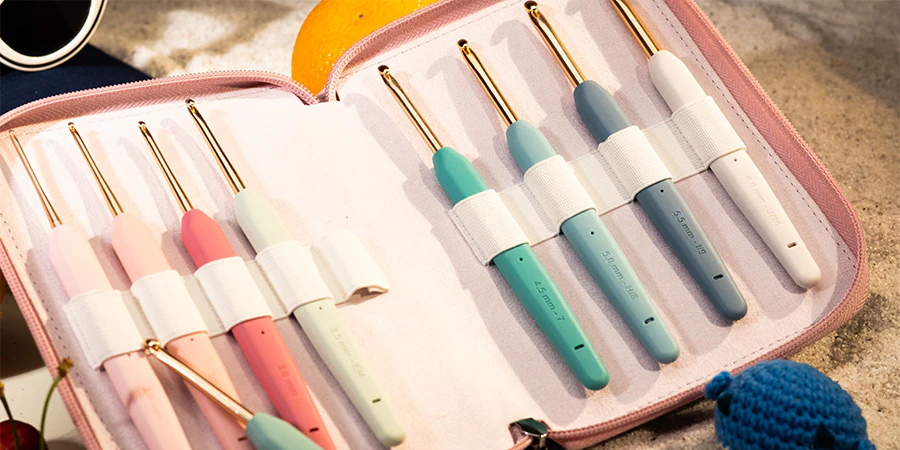
Size markings sound like a small detail until you're squinting at a hook trying to figure out if it's a 4mm or a 5mm from the "wrong" angle. Clear labeling that reads well from both directions saves a lot of frustration, especially while you're still building muscle memory for gauge and tension.
The KnitPro Waves 2.0 hooks have a textured, easy-grip handle with clear sizing, which makes them useful for left-handed crocheters who are still learning to track their tension consistently.
3. Material and Glide: Wood vs. Metal
The material of your hook changes how yarn moves across it, and that matters more when you're still getting comfortable with the motion.
Wood and birch hooks tend to grip the yarn slightly, which gives beginners more control and helps with tension. The KnitPro Symfonie 2 Crochet Hooks, made from birchwood, are a great beginner choice for exactly this reason.
Metal hooks, on the other hand, glide faster and are better once your stitches loosen up and your speed increases. The KnitPro Zing Crochet Hooks are lightweight aluminum and offer a smooth glide, making them a good next step once you've built up some confidence.
Exploring the Best Crochet Hooks and Sets for Left-Handed Beginners
The KnitPro Oasis Interchangeable Crochet Hooks let you swap heads and handles, which is ideal if you're a left-handed crocheter still experimenting with grip styles. Instead of buying several full hooks to test what feels right, you can mix and match.
Best for Ergonomic Comfort or Hand Fatigue, the KnitPro Vybe crochet hook sets come up again, especially for crocheters dealing with hand fatigue or arthritis. The even, contoured grip reduces strain during longer sessions.
How to Hold a Crochet Hook Left-Handed:
- Hold the hook in your left hand, the same way a right-handed crocheter would hold it in their right, just mirrored.
- Let the yarn run through your right hand instead of your left, controlling tension from that side.
- Watch tutorials in mirror mode or flipped playback if the instructor is right-handed, since this makes the hand positioning easier to copy directly.
- Start slow with basic chain stitches before moving into more complex stitch patterns.
Also Read: Left-handed Crochet: What Makes it Different?
Final Thoughts
Technique matters more than the tool, but that doesn't mean the tool doesn't matter at all. Ergonomic, symmetrical, clearly marked single-ended crochet hooks like KnitPro's Vybe, Waves 2.0, Symfonie 2, Zing, and interchangeable crochet hooks Oasis range remove a lot of unnecessary friction for left-handed crocheters just getting started.
FAQs:
Q1. Do Left-Handed Crocheters Need Special Hooks?
A. No. Crochet hooks are directionally neutral, so left-handed crocheters can use the same hooks as right-handed crocheters. Hooks with symmetrical handles and clear size markings can be especially helpful because they make learning and handling easier regardless of hand dominance.
Q2. Can a Left-Handed Person Use a Right-Handed Crochet Hook?
A. Yes. There is no such thing as a strictly right-handed crochet hook. Any standard crochet hook can be used by a left-handed crocheter. However, ergonomic hooks with asymmetrical grips may feel less comfortable depending on the design.
Q3. What's the Easiest Hook Grip for Left-Handed Beginners?
A. A symmetrical, ergonomic grip is generally the easiest option for left-handed beginners. A hook such as the KnitPro Vybe, with a comfortable design that does not favor either hand, can feel natural and provide good control while learning crochet techniques.
Q4. Are Wooden or Metal Hooks Better for Left-Handed Crocheters?
A. Wooden hooks, such as the KnitPro Symfonie 2, can be a good choice for beginners because they provide a comfortable grip and greater control over the yarn. Metal hooks, such as the KnitPro Zing, offer a smooth surface and can be ideal once you've developed more speed and confidence.
Q5. What Size Crochet Hook Should a Left-Handed Beginner Start With?
A. A mid-range crochet hook size, typically around 4 mm to 5 mm, is a good starting point for beginners. This size is large enough to make the stitches easy to see while you're learning the basic movements and developing consistent tension.


