

We’ve all been there. You tell yourself you’ll stop reaching for your phone the moment you wake up, stop stress-eating after work, stop biting your nails during meetings. And then… you do all of it anyway. Breaking bad habits is genuinely hard — not because you lack willpower, but because your brain has spent years building those pathways. The good news? You can build new ones. And knitting, of all things, is surprisingly well-suited to help you do it.
It turns out that two knitting needles (or a crochet hook or even a punch needle tool) and a ball of yarn might be one of the most effective habit-replacement tools your brain has ever been offered.
Your Brain on Bad Habits (a Quick Science Primer)
Habits, good or bad, live in the basal ganglia, a part of the brain that handles automatic behavior. Once a habit is encoded, it runs almost on autopilot: cue → routine → reward. The tricky part is that you can’t simply delete a habit. But you absolutely can replace the routine while keeping the same cue and reward structure.
This is exactly what behavioral scientists call habit substitution and it’s one of the most evidence-backed approaches to behavior change available. You don’t fight the urge. You redirect it. That’s where knitting (or crafting) comes in.
Research published in the British Journal of Occupational Therapy found that 81% of knitters reported feeling happier after knitting, and over 50% described feeling “very happy.” A separate study noted that the repetitive hand movements involved in knitting trigger the brain’s relaxation response, the same mechanism activated by meditation.
— British Journal of Occupational Therapy
Also Read: 10 Tips to Boost Happiness with Crafting
Why Knitting is an Unusually Effective Habit Replacement
Most bad habits share a common trait: they give your hands, eyes, or brain something to do during moments of stress, boredom, or anxiety. Scrolling, snacking, smoking, and nail-biting all fill a gap. Knitting (in fact, any craft) fills that same gap, but with very different consequences.
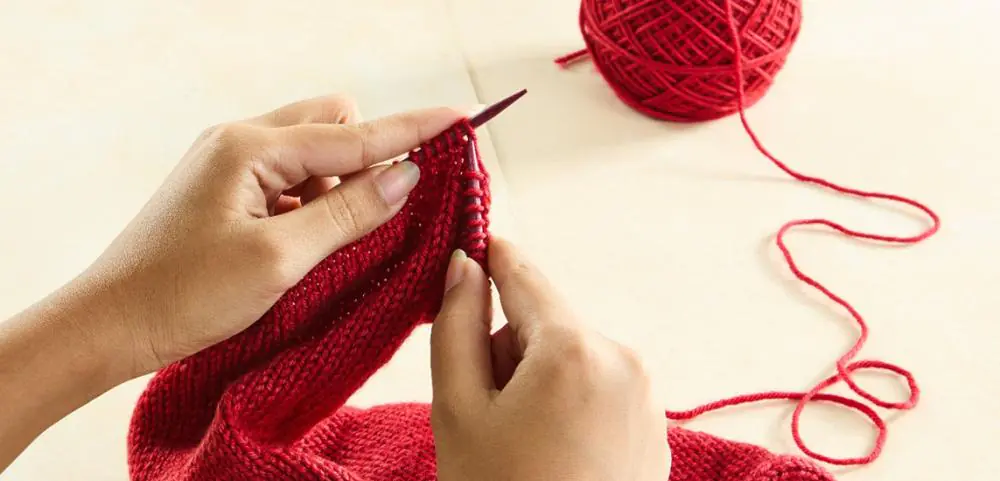
Knitting occupies both hands, requires concentration, and produces a steady rhythm, which makes it almost physically incompatible with several common bad habits. You genuinely cannot scroll and knit at the same time. You cannot mindlessly snack. And the focused, meditative state knitting induces makes stress-driven impulses feel noticeably weaker.
Also Read: 5 Reasons why Knitting is Mindful Meditation
The Dopamine Loop: How Knitting (or Crochet) Rewires Your Reward System
Here’s something fascinating: every time you complete a row, a pattern repeat, or a whole project, your brain releases a small hit of dopamine — the same neurotransmitter behind the reward you feel from bad habits. Knitting essentially hijacks the brain’s reward loop and points it somewhere productive.
Neuroscientist Kelly Lambert has shown that crafting activities that use our hands to produce a visible result, what she calls “effort-driven rewards,” — activate the brain’s reward circuits in ways that build resilience against anxiety and depression.
— Lambert K. — Lifting Depression (2008)
This is why finishing even a small knitting project feels genuinely satisfying, not just mildly pleasant. Your brain is wired to reward making things. Bad habits exploit this system with shortcuts. Knitting gives it something real.
Also Read: Knitting for Anxiety Relief: Everything You Need to Know
Which Bad Habits Can Knitting Actually Help With?
It’s not a magic cure for everything, but knitting has real, documented efficacy against several common bad habits:
- Excessive screen time - Knitting physically occupies your hands and demands just enough attention to crowd out the phone-reaching impulse. Many knitters report a natural reduction in evening scrolling within the first week.
- Stress eating - Because crafting activates the body’s relaxation response and lowers cortisol levels, it addresses the root cause rather than just blocking the behavior.
- Smoking - Some smoking cessation programs now include knitting as a recommended hand-occupation strategy. It’s been used in clinical settings to reduce cigarette cravings by keeping hands busy during the peak urge window.
- Nail-biting and skin-picking - Both are repetitive stress behaviors. Knitting redirects that same repetitive impulse into something constructive, and the tactile sensation of yarn can satisfy the sensory need that drives the habit.
- Anxiety and Anxious Thoughts - A bad habit of anxious thoughts builds up when your mind is free, keeping your hands busy has a direct effect on your mind.
How to Actually Use Knitting (or Crochet) as a Habit Replacement
The key is to place your knitting exactly where the bad habit usually happens. Keep knitting needles (or a crochet hook) with the project on your sofa if you stress-scroll in the evenings. Keep one in your bag if you tend to reach for your phone in queues. The substitution works best when it meets the cue at the source.
Start with something simple — a beginner scarf, a swatch, a few rows of anything — so the learning curve doesn’t compete with the craving. The habit loop needs to feel easy to enter, or you’ll revert to the path of least resistance.
And don’t aim for perfection. A slightly dropped stitch during a moment of stress is still a moment you didn’t reach for the biscuit tin.
Real Benefits You’ll Notice in Just a Week:
- Calmer evenings with noticeably less restless scrolling
- Improved mood and reduced anxiety after just a few sessions
- Better sleep quality as cortisol levels gradually drop
- A finished project and a quiet pride in having made something real
Ready to start? Whether you’re brand new to knitting or returning after years away, the right tools make all the difference. Explore beginner-friendly knitting needles, yarn selections, and begin replacing one habit, one row at a time.
KnitPro is your creative companion with a wide range of knitting needles, crochet hooks, hand dyed yarn and accessories in different materials to suit you comfort and crafting needs.


