

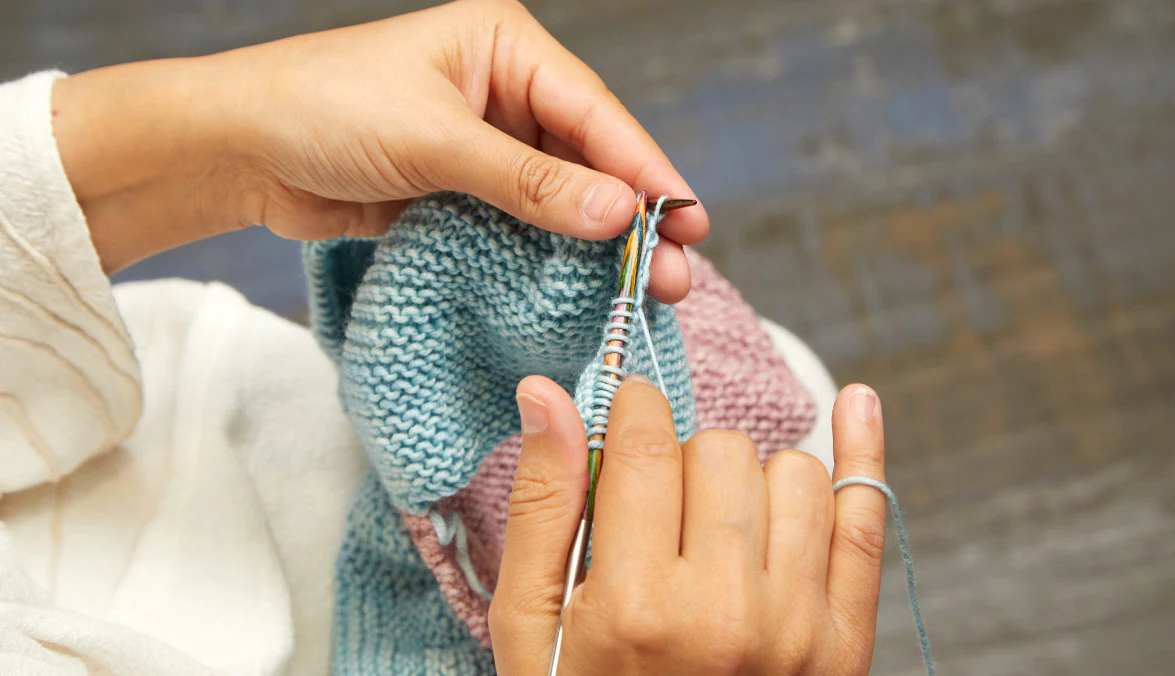
As the air turns crisp and the evenings grow longer, it's sweater weather. There is nothing quite like pulling on a soft, hand-knitted sweater that feels like a hug. For crafty makers, it’s time to grab your knitting needles and cozy yarn, check out the season’s latest designs, or revisit vintage patterns. Now imagine giving that feeling to someone you love. With the holiday season ahead, a hand-knitted sweater is a gift of cozy warmth, with hours of care worked into every stitch. Don’t worry about the knitted sweater’s love curse; it’s nothing but an old knitting superstition!
The good news about knitting a sweater is that you don't need to be an expert. There are many beginner-friendly versions. With the right yarn, a simple pattern, and some patience, a first sweater is within reach. Browse Symfonie's free knitting sweater patterns to find a beginner-friendly design, then follow the steps below.
Also Read: Beginner's Guide to Knitting a First Sweater
How Do You Knit a Sweater?
To knit a sweater, choose a simple pattern and suitable yarn, knit a gauge swatch, then knit the back, front, and sleeves. Next, join the pieces by seaming, or knit them in the round, and finish with the neckband and by weaving in ends. A first sweater typically takes four to eight weeks of casual knitting.
What Do You Need to Knit a Sweater?
- Yarn: Enough for the size you're making, plus a spare skein.
- Knitting Needles: The size recommended on your pattern, either straight or circular knitting needles.
- Accessories: Stitch markers, a tapestry needle, measuring tape.
- A beginner-friendly pattern, basic garter or stockinette.
How Do You Choose the Best Yarn for a Sweater?
Yarn decides how your sweater looks, feels, and wears. For beginners, a smooth, medium-weight yarn (DK or worsted) in a light or mid-tone colour makes stitches easy to see and fix. Wool blends and soft merino blends offer warmth and easy care, while cotton suits milder weather. Hand-dyed yarn looks artisanal and adds to the beauty of the project. Always buy all your yarn at once, and check that the dye lot matches so the colour stays consistent.
Also Read: Yarn Selection Tips for Knitting the Perfect Sweater
What Types of Knitting Needles Can You Use to Knit a Sweater?
You can knit a sweater with several types of knitting needles, and the best choice depends on how your pattern is constructed.
Straight Knitting Needles: Ideal for sweaters knitted in flat pieces (back, front, and sleeves) and seamed together. They are easy to handle and a good fit for beginners.
Circular Knitting Needles: Handy for larger projects and for sweaters worked in the round, such as top-down pullovers. The weight of the sweater rests in your lap rather than on your wrists, so they can be more comfortable. Interchangeable circular needles are a flexible option that lets you swap needle sizes and cable lengths, so one set works for many projects.
Double-Pointed Needles (DPNs): Used for small circumferences like sleeves, cuffs, and neckbands when knitting in the round.
If you’re just starting out, straight needles are a perfectly good choice.
Also Read: Straight vs. Circular Knitting Needles - Everything You Need to Know
Step-by-Step: How to Knit a Sweater for Beginners
Step 1: Pick a Simple Pattern
Start with a basic pullover with a crew neck and straight body. Avoid colourwork or complex cables on your first project.
Step 2: Knit a Gauge Swatch
Gauge is the number of stitches and rows per 10 cm (4 inches). Knit a swatch at least 15 cm square, wash it as you would the finished sweater, and measure. If you have too many stitches, go up a needle size. Too few, go down. Skipping this step is the most common reason sweaters turn out the wrong size.
Step 3: Take Your Measurements
Measure your chest, length, and arm length, or those of the person you're knitting for. Choose the pattern size based on the finished chest measurement, which includes a little ease for comfort.
Step 4: Knitting the Sweater
Cast on the required stitches and work the ribbing, usually 5 to 6 cm of knit 1, purl 1. Switch to stocking stitch and continue until you reach the armhole, then shape the armholes and shoulders as the pattern directs.
Work the front the same as the back until you reach the neckline. Divide the stitches and shape the neck, working each side separately.
Cast on for the cuff, work the ribbing, then increase evenly along the sides to widen the sleeve toward the upper arm. Knit both sleeves, keeping a row counter so they match.
Step 5: Block the Pieces
Gently wet or steam each piece and pin it to the right measurements. Blocking evens out stitches and makes seaming much easier.
Step 6: Seam and Finish
Sew the shoulders, then attach the sleeves, then close the side and sleeve seams using mattress stitch. Pick up stitches around the neckline and knit a ribbed neckband. Weave in all loose ends.
Also Read: How to Knit Sweaters with Straight Needles: Step by Step
Common Beginner Mistakes to Avoid
- Skipping the Swatch. It saves hours of rework.
- Choosing a Tricky Yarn. Fuzzy or very dark yarns hide stitches and make mistakes harder to spot.
- Ignoring Tension. Keep your stitches consistent, and relax your grip.
- Rushing the Finishing. Careful seaming and blocking give a polished, shop-quality look.
Start Your Cozy Knitting Journey
Knitting a sweater is a project of patience and pride. Every row brings you closer to something warm, wearable, and wonderfully personal, whether you keep it or wrap it up as a gift for someone special. Pick a pattern, choose a yarn you love, and cast on your first stitch today.
Ready to begin? Explore Symfonie's free sweater patterns and let the cozy season inspire you.


